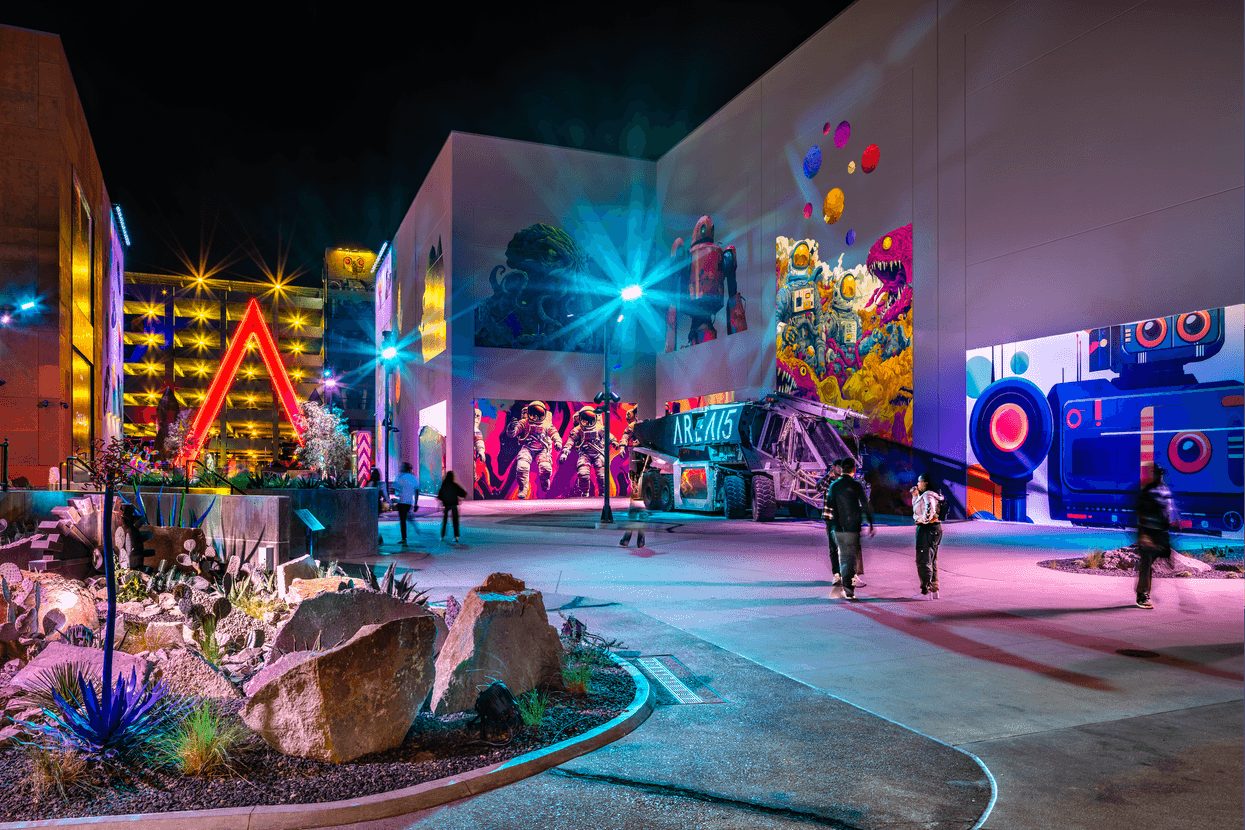
The news is not another dozen attractions. It is a real-estate model where immersive tenants anchor a district the way department stores once anchored a mall.
AREA15 in Las Vegas has signed a wave of new tenants, with more than 12 new experiences slated to open across 2026. The line-up includes the largest-ever Museum of Ice Cream, billed with a world-first ice cream buffet, iFLY indoor skydiving, and The Bowl, a restaurant featuring robot chefs. It also adds House Rules, a competitive-socialising venue, and a Miniso flagship, following the earlier arrivals of Universal Horror Unleashed and Felix and Paul's Interstellar Arc.
The real signal is the leasing model, not the line-up
It is tempting to read this as a list of attractions. The more useful read is structural: AREA15 is behaving like a district that leases immersive experiences the way a mall once leased anchor stores. The mix, a candy-coloured museum, indoor skydiving, robot-chef dining, a competitive-socialising room, and a retail flagship, is not curated by theme. It is curated by dwell time and repeat visits. The product being sold to operators is not a show; it is a slot in a place that already has footfall.
That reframes who the buyer is. When the district is the platform, the recurring customer is the landlord and the tenant, not only the end brand. Each of those 12-plus openings is a build brief with a deadline, a footprint, and a neighbouring tenant that sets the bar. The competition is no longer whether this is a good campaign but whether this box out-performs the one next door on time spent and tickets sold.

What a producer can do now
Map the district operators the way you map key accounts. A signed tenant slot is one of the cleaner briefs in experiential: fixed footprint, known audience, and an operator motivated to keep the space full. If you can deliver a turnkey immersive box, designed, built, and handed over ready to run, you are selling into a pipeline that refreshes on a leasing cycle, not a campaign cycle. The range at AREA15, from a Miniso flagship to a robot-chef restaurant, shows how wide immersive tenant now reads.
For a toolkit, the lesson is that retail-adjacent, ticketed spaces are becoming standard clients, so the ability to stand up a branded, revenue-earning room on a landlord's timeline belongs in your core kit. Treating retail-scale experience spaces as a repeatable format, rather than a one-off, is what lets you say yes to a district slot without rebuilding your process for every tenant.
A brand or operator does not need an in-house immersive team to take one of these slots. SensaLab works as the white-label real-time 3D and immersive layer behind agencies and brands, designing and running the experience while the venue, the tenancy and the name out front remain theirs.