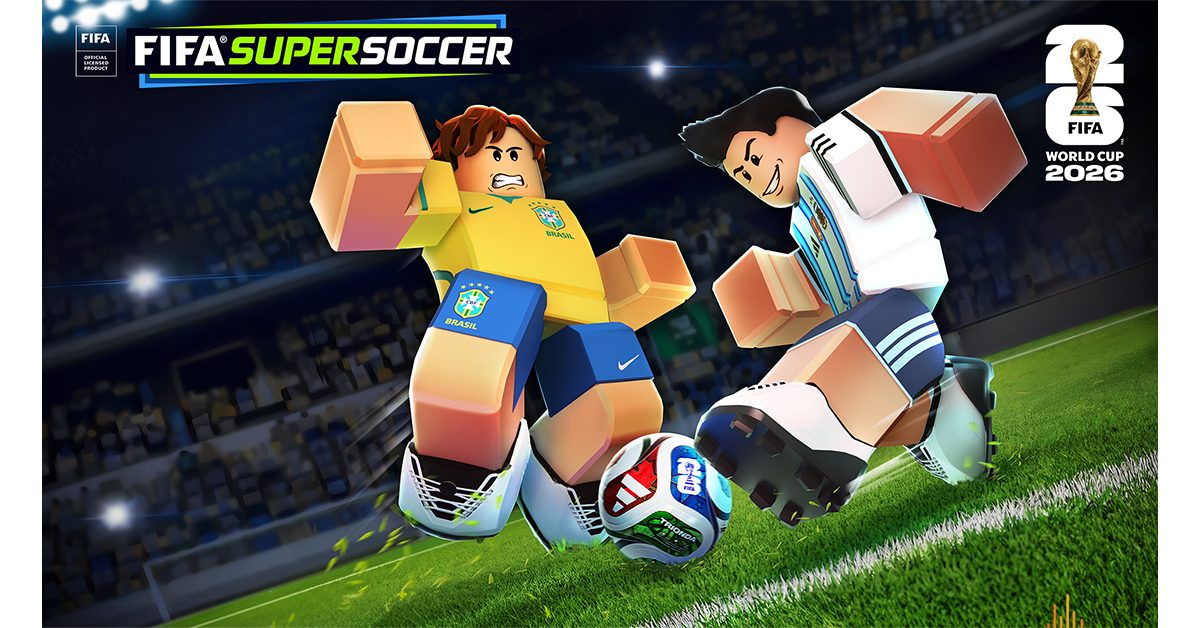
The news is not that FIFA is on Roblox. It is that the sport's governing body now treats a live game economy as a primary World Cup venue, not a marketing afterthought.
FIFA and Gamefam launched an official FIFA World Cup 2026 event on Roblox on Friday, June 5, 2026, running through July 31, GamesBeat reports. All 48 qualified national teams are playable inside FIFA Super Soccer, including reigning champion Argentina. The activation is a six-game crossover spanning Gamefam titles that together record a combined 28 million gameplay sessions per week, and FIFA is describing it as the platform's biggest sports event ever.
The real signal is duration, not the logo
The surface read is that another sports body has planted a flag on Roblox. The deeper signal is the shape of the commitment. This is not a launch-week stunt timed to a keynote. It is a near two-month live event that runs across a portfolio of games and stays open into late July. The reach figure, 28 million sessions a week, matters less as a headline than as a description of a standing audience a brand can meet inside a running economy rather than rent for a single burst.
For a producer, that reframes the brief. The question shifts from what do we build for the moment to what runs for the season. A World Cup, a product launch, a film release each has a window measured in weeks, and a persistent build that ships new challenges, teams or drops across that window compounds attention instead of spending it once. Planning for a live-ops calendar, rather than a single reveal, is the move the FIFA event models most clearly. The economics follow the same logic: a build amortized across nearly two months of play earns its keep many times over, where a one-day stunt has to justify itself in a single news cycle.

Why it belongs in an experiential toolkit
The instinct is to file this under gaming and move on. It belongs in the same toolkit as a flagship activation or a broadcast tie-in, because it does the same job, putting a brand inside an experience an audience already chose, at a scale physical footprints cannot match. A real-time game engine world is not a substitute for a hero installation. It is the channel that extends one, giving the on-site moment a place to live in the weeks before and after.
The craft question is the same one that governs any good build. Does the interaction reward attention, and does it hold up across repeat visits. Forty-eight playable teams is a content-depth decision, not a graphics one, and a spread of that size is what lets a crossover carry 28 million sessions a week without wearing thin. The activations that will age well here are the ones designed like live products, with a reason to return, rather than skins bolted onto a logo and left to coast.
That is the layer we work in without a name on it. SensaLab is the white-label real-time 3D and immersive studio agencies and brands use to design and run experiences under their own name, persistent game-engine worlds included, so the credit and the audience both stay yours.