The news is not a single Gucci lens. It is generative AI turning AR into a measurable luxury ad unit for the demographic that will define luxury spend.
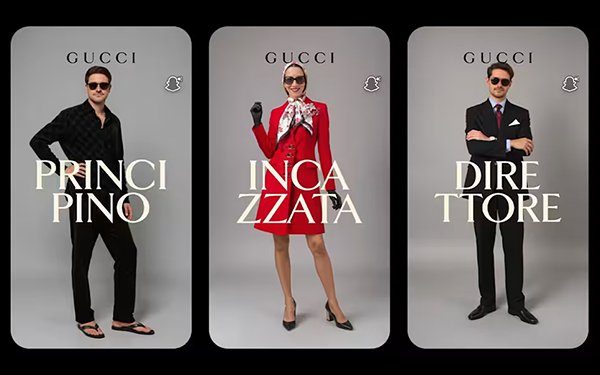
Gucci's 'La Famiglia' is the first Sponsored AI Lens for a luxury fashion brand, powered by Snapchat's generative AI, per MediaPost. The lens transforms users into collection-based character personas, L'Incazzata, Direttore, La VIP, Il Figo and Principino. Snap says about 90% of 13-to-24-year-olds globally use the app, and roughly 80% of its users report that AR experiences help their purchase decisions. The move follows Snap's 2025 holiday luxury push with Chopard, BOSS and Lancome, and lands as Gen Z is projected to reach more than a quarter of global luxury spend within four years.
The real signal is the ad unit, not the lens
One branded lens is not the story. The story is that generative AI has turned the sponsored AR unit into something a luxury house will buy, a persona system that reads as fashion rather than a face-warping gimmick, distributed to a platform that reaches roughly nine in ten people aged 13 to 24. Tie that reach to Snap's claim that around 80% of users say AR shapes purchase decisions, and to Gen Z's projected share of luxury spend, and the reframe is clear: AR is being sold as a measurable top-of-funnel unit for the next generation of luxury buyers, not as a novelty impression.

What a producer can do now
The practical takeaway is to treat generative personas with campaign discipline. 'La Famiglia' works because the characters are tied to a collection and carry a point of view, not because they warp a face. A producer briefing this kind of work should scope the persona system, names, tone, wardrobe logic, as seriously as key art or a film, and should insist on a purchase story the AR moment plugs into, so the experience is accountable to intent rather than to view counts alone.
It belongs in an experiential toolkit because it bridges owned moments and paid reach. The same generative persona built for a physical activation can travel as a sponsored lens, letting one creative idea live on the floor and in the feed without being rebuilt twice. That continuity, one character system, two surfaces, is where AR stops being a stunt and starts being infrastructure.
Where it fits today
The figures are Snap's own and describe intent rather than proven sales, so treat them as directional and instrument your own funnel. The dependable part is not the conversion claim; it is the audience concentration and the format's new legitimacy with luxury, both of which are reasons to build the capability before a client asks for it by name.
A house does not need an in-house AR team to move here. SensaLab is the white-label real-time 3D and immersive layer that agencies and brands use to design and run these persona-driven experiences under their own name, so the character system ships as the brand's signature rather than a vendor's.